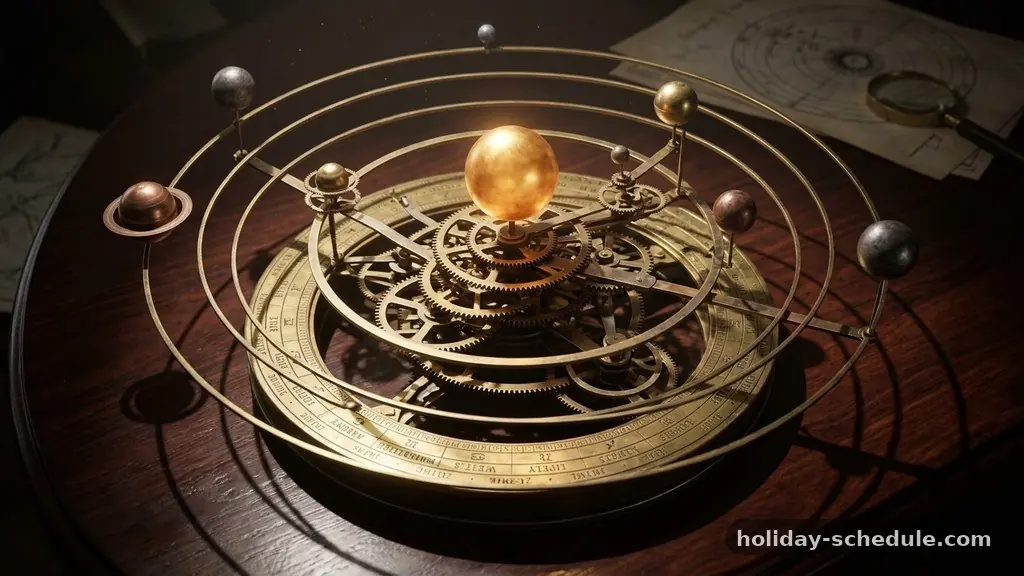
When you flip through a calendar, you might notice that while Christmas stays fixed on December 25th, other major events seem to wander across the pages. Understanding why some holidays are observed on different dates each year helps us appreciate the ancient astronomical systems that still govern our modern lives.
These shifts aren’t random; they are deeply tied to the movement of the earth, the moon, and the sun. By exploring the history of the solar calendar versus the lunar cycle, you will gain a clearer picture of why our cultural and religious traditions remain tethered to the natural world.
The Core Reason for Shifting Dates
The primary reason for the variation in holiday dates is the fundamental difference between how we measure time. Our modern life relies on the Gregorian calendar, which is a purely solar system designed to keep the seasons in alignment with the earth’s orbit around the sun.
However, many religious traditions were established using a lunar calendar or a lunisolar calendar. Because the moon does not complete its cycle in the same amount of time as the earth completes its orbit, these two systems inevitably drift apart.
A lunar month, or a synodic month, lasts approximately 29.5 days. If you multiply that by 12, you get a lunar year of about 354 days, which is roughly 11 days shorter than our solar year.
Over time, this 11-day discrepancy causes holidays based on the moon to migrate backward through the solar calendar. To keep these holidays within their intended seasons, many traditions must periodically insert an extra month, effectively creating a “leap month” to reset the cycle.
The Influence of the Lunar Cycle
Many cultures have relied on the phases of the moon to determine the start of months and the timing of significant rituals for millennia. When a holiday is tied to the moon, the date changes annually because the lunar cycle does not align with the standard 365-day solar year.
This is why observances like Ramadan move forward by about 11 days every year in the Gregorian calendar. The start of this period is traditionally marked by the first sighting of the new crescent moon.
Because the lunar year is shorter, the celebration travels through every season over a period of about 33 years. This movement means that a holiday might occur in the heat of summer for several years before gradually shifting into the cooler months of autumn or winter. This constant migration is a core feature of the faith, ensuring that the observance is tied to the actual observation of the heavens rather than a rigid, human-made grid.
Lunisolar Systems and Balancing the Heavens
A lunisolar calendar is a brilliant compromise between the moon’s phases and the sun’s position. Cultures that use this system, such as those following the Hebrew or Chinese calendars, need to keep their holidays in sync with specific seasons.
For instance, Passover must occur in the spring to align with the agricultural cycle and the historical narrative associated with the holiday. If it relied solely on a pure lunar calendar, it would eventually drift into the dead of winter.
To prevent this drift, these calendars add an extra month every few years. This adjustment, known as an intercalary month, ensures that the lunar months stay tethered to the solar seasons. You can see how these systems interact in the table below, which highlights how different calculation methods affect the timing of major events.
| Calendar System | Basis of Calculation | Annual Length | Holiday Drift |
|---|---|---|---|
| Solar (Gregorian) | Earth’s orbit around the sun | 365.24 days | Fixed dates |
| Lunar (Hijri) | Moon phases | 354 days | 11-day annual shift |
| Lunisolar (Hebrew) | Moon and Sun | 354-384 days | Adjusted with leap months |
Astronomy and the Timing of Easter
The calculation for Easter is perhaps one of the most famous examples of complex astronomical alignment in the Western world. According to the standard ecclesiastical rules established at the Council of Nicaea in 325 AD, Easter falls on the first Sunday after the first full moon that occurs on or after the vernal equinox. Because the date of the full moon changes and the day of the week for that full moon shifts, the holiday can land anywhere between March 22 and April 25.
This method ensures that the celebration remains connected to the spring season, symbolizing rebirth and renewal. You can find more detailed information on the official United States Naval Observatory resources regarding the exact timing of equinoxes and full moons.
Because it relies on the interaction between a lunar event (the full moon) and a solar event (the equinox), the date is never static. It is a living example of how ancient sky-watching dictates our current social calendar.
Why Seasons Matter for Religious Observances
Religious observances are often deeply intertwined with the natural cycle of the year, including harvests and weather patterns. In ancient agrarian societies, knowing when to plant or harvest was a matter of survival, and rituals were often timed to match these milestones. When a religion spread across different climates, the need to keep holidays in their proper “season” became a priority for community cohesion.
If a harvest festival were to shift from autumn to spring due to calendar drift, the symbolic meaning would be lost. By using a lunisolar calendar, communities could maintain the integrity of their celebrations while still respecting the moon’s importance in their theology.
This balance between the celestial and the seasonal is the primary reason why we have such a diverse array of calendar structures today. The shifting nature of these dates serves as a reminder that our ancestors were experts at tracking the sky.
The Role of Leap Years and Solar Precision
While lunar calendars deal with the “missing days” of the moon, our solar calendar has its own quirk: the leap year. Because the earth takes approximately 365.24 days to orbit the sun, we accumulate a fraction of a day every year.
If we didn’t add a day every four years, our calendar would slowly drift out of alignment with the seasons. We would eventually see the summer solstice occurring in what we currently call winter.
This precision is necessary to keep our fixed holidays, like New Year’s Day, in their proper place. The interaction between the leap year and the lunar-based holidays creates a complex web of timekeeping.
It is a fascinating study in how human societies have worked to reconcile the messy, non-integer cycles of the universe into a usable, reliable format. Every time we add a day in February, we are effectively keeping the rest of the year in its rightful spot.
Comparing Fixed and Variable Holidays
It is helpful to categorize holidays into those that are “fixed” and those that are “variable” to see the patterns clearly. Fixed holidays generally follow the solar Gregorian calendar, while variable holidays are linked to lunar or lunisolar cycles. This distinction highlights how different cultures prioritized different celestial bodies when constructing their systems.
- Fixed Holidays: Christmas (Dec 25), New Year’s Day (Jan 1), Independence Day (July 4).
- Variable Holidays: Easter (Spring), Ramadan (Lunar cycle), Lunar New Year (Lunar cycle), Diwali (Lunar cycle).
- Mixed Systems: Thanksgiving (fixed by day of the week, not date), which creates a predictable but shifting calendar event.
This mix of systems means that our modern year is a blend of ancient observation and modern standardization. While we rely on the solar calendar for our daily work and school schedules, we continue to honor the lunar and lunisolar traditions that connect us to the broader rhythms of the planet. It is this diversity of timekeeping that makes the calendar year feel dynamic and full of anticipation.
Common Questions About Calendar Shifts
Why does Easter change every year?
Easter is tied to the first full moon following the spring equinox. Because this involves both a lunar phase and a specific solar seasonal marker, the date must be recalculated annually to maintain the tradition’s original astronomical requirements.
Is Ramadan always on the same day in the lunar calendar?
Yes, Ramadan always begins on the same day of the Islamic lunar calendar (the start of the ninth month). However, because the Islamic year is shorter than the Gregorian solar year, the date shifts backward by about 11 days every year.
How do leap years affect lunar holidays?
Leap years primarily affect the solar calendar to keep it aligned with the earth’s orbit. While they don’t change the lunar cycle itself, they do impact the Gregorian date on which a lunar holiday might fall in a given year.
Why don’t all cultures use the same calendar?
Different cultures developed calendars based on their specific needs, such as agriculture, navigation, and religious observation. Over time, these systems became ingrained in cultural identity, leading to the variety of calendars we see today.
What is the most accurate calendar in the world?
Accuracy depends on the purpose. The Gregorian calendar is highly accurate for keeping seasons stable over long periods. Other calendars, like the Hijri or Hebrew, are more accurate for tracking the moon’s phases, which was historically vital for religious timing.
Reflecting on the Rhythm of Time
The fact that some holidays are observed on different dates each year is not a sign of confusion or disorder. Instead, it is a testament to the sophisticated ways humans have observed the heavens to mark the passage of time.
Whether through the steady march of the solar year or the shifting phases of the moon, these systems provide a framework for our shared cultural and religious life. By understanding the science behind these movements, we can better appreciate the history etched into our calendars.
Next time you see a holiday date change on your wall calendar, remember that it is a connection to an ancient heritage. These shifting dates invite us to look up and notice the moon and the sun, reminding us that we are part of a larger, cosmic cycle.
Embracing this variability adds a layer of depth to our traditions, making each year unique as we follow the rhythm of the stars. Understanding why some holidays are observed on different dates each year allows us to participate more fully in the rich, diverse tapestry of human timekeeping.