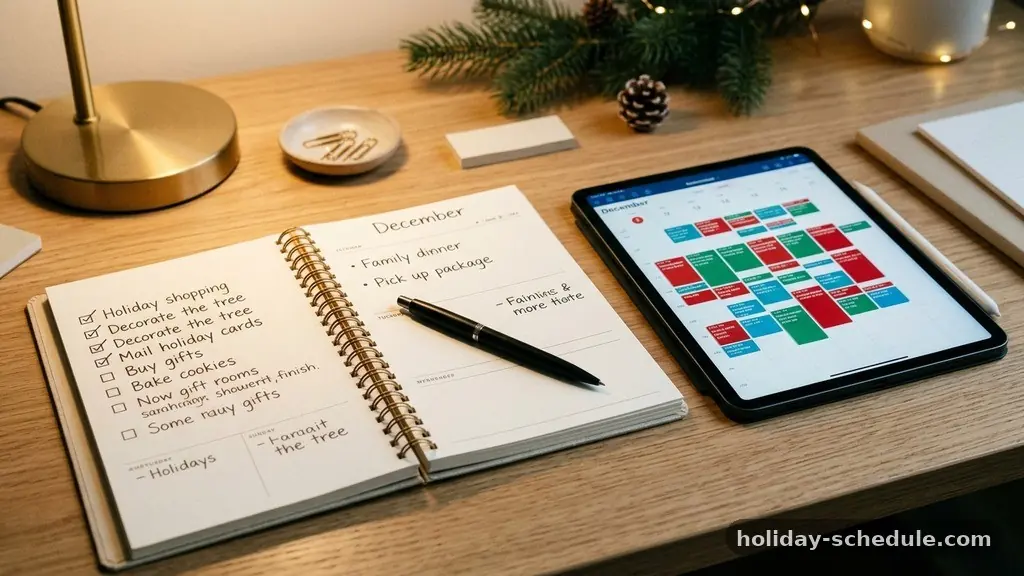
Planning for time off often feels like a chore, yet building a Personal Holiday Calendar That Actually Works is the secret to reclaiming your mental well-being. By mapping out your leave, professional deadlines, and personal milestones in one place, you shift from reactive scrambling to proactive rest. This approach ensures your downtime is protected rather than squeezed into the margins of an overbooked schedule.
When you treat your vacation days with the same strategic importance as high-priority meetings, you create a sustainable rhythm that prevents burnout. You will gain a clearer vision of your year, allowing you to prioritize experiences that truly restore your energy levels.
The most effective way to start is by securing your non-negotiable dates early in the year. Look at your company’s leave policy and the public holiday schedule to identify your primary windows for rest. Many people wait until they are already exhausted to request time off, which often conflicts with peak travel prices or busy work cycles.
Instead, mark your preferred weeks on a dedicated calendar view immediately after the new year begins. This prevents the “use it or lose it” rush at the end of December. By committing to these dates in January or February, you treat your personal recovery as a firm professional obligation.
The Mechanics of Your Calendar
To maintain a functional system, you should utilize a tool that syncs across all your devices, such as Google Calendar or Outlook. These platforms allow for color-coding, which is essential for visual separation between your professional commitments and personal holiday plans. Create a specific calendar layer labeled “Time Off” or “Personal Recharge” so you can toggle it on or off as needed.
This prevents your personal plans from cluttering your daily task list while keeping them visible enough to influence your long-term planning. Consistency is the primary factor in whether your system holds up under pressure.
Strategic Time Blocking for Leave
Effective scheduling requires more than just marking a week as “off.” Use the technique of time blocking to account for the buffer days before and after your actual travel or staycation. If you plan to be away from Friday to Sunday, block out the preceding Thursday afternoon for final project handoffs.
Similarly, reserve the Monday after you return for clearing your inbox rather than diving into back-to-back meetings. This buffer prevents the common phenomenon of returning from a break more stressed than when you left. Treat these transition blocks as sacred parts of your vacation package.
Categorizing Your Time Off
Not all holidays serve the same purpose, and categorizing them helps you balance your needs. Some breaks are meant for intensive travel, while others are purely for recovery or family obligations. You can group these into categories to ensure you don’t accidentally burn all your leave on one type of activity.
A balanced distribution keeps your professional performance high throughout the year. Consider the following breakdown of holiday types to organize your annual planning effectively.
- Travel-Intensive Breaks: Longer periods intended for trips, usually lasting seven to ten days.
- Recovery Staycations: Short, three-day weekends designed for home-based rest and digital decluttering.
- Family/Social Commitments: Fixed dates like weddings, reunions, or religious holidays that require travel.
- Buffer Days: Strategic days off before or after major projects to avoid burnout.
Managing Professional Boundaries
Your holiday calendar is only as effective as your ability to defend it. When you mark your calendar, share the blocked-out dates with your team or manager as early as possible. This transparency builds trust and allows colleagues to plan around your absence, reducing the likelihood of them reaching out during your downtime.
If you have a shared team calendar, ensure your “Out of Office” status is set to recurring well in advance. Setting these boundaries is an act of professional maturity that highlights your dedication to sustainable productivity.
Comparing Planning Methods
The method you choose to manage your schedule often dictates its success or failure. Many people oscillate between rigid paper planners and fluid digital tools, often failing because they lack integration.
A digital system is generally superior for holiday planning because it allows for automated notifications and easy updates when plans change. The following table compares common methods to help you identify which approach aligns with your needs.
| Method | Flexibility | Integration | Primary Benefit |
|---|---|---|---|
| Digital Calendar | High | High | Automated alerts and cross-device sync. |
| Paper Planner | Low | None | Physical connection and reduced screen time. |
| Project Management App | Medium | High | Links leave directly to project milestones. |
| Spreadsheet Tracker | Medium | Low | Detailed breakdown of remaining leave days. |
The Role of Digital Decluttering
Part of building a Personal Holiday Calendar That Actually Works involves managing your relationship with technology during your time off. If your calendar is synced to your work email, you will likely be tempted to check notifications while you are supposed to be resting. Dedicate a specific “holiday mode” in your digital organization system that mutes non-essential work alerts.
You might even create a separate work profile on your phone that you can disable with a single tap. If your technology remains intrusive, your calendar will fail to protect your mental recharge.
Adjusting for Seasonal Shifts
Your energy levels are not static throughout the year, and your calendar should reflect that reality. Some seasons, such as the end of a fiscal year or a busy Q4, require more stamina, while others offer natural lulls. Schedule your longer breaks during the slower periods to maximize the impact of your rest.
Conversely, ensure you have shorter, more frequent breaks during high-stress months to keep your performance consistent. Seasonal scheduling turns your calendar into a tool for managing your personal energy rather than just tracking days.
Integrating PTO Tracking
Many employees treat their PTO balance as a mystery until they need to use it. You must include a dedicated tracker within your calendar system to log exactly how many days you have available. Update this tracker every time a request is approved to ensure you don’t over-book or leave days on the table.
Knowing your exact balance allows you to make informed decisions about taking extra long weekends when you feel the onset of fatigue. This level of oversight turns a vague benefit into a concrete asset for your career.
Common Questions About Scheduling
How far in advance should I book my holidays?
It is best to map out your primary vacation weeks at least six months in advance. This gives you the best chance of securing your preferred dates before your team’s schedule fills up.
What do I do if a work emergency happens on my planned holiday?
Set a clear communication policy with your team before you leave. If you must be reachable, define “emergency” specifically so that you aren’t interrupted for minor issues that can wait until your return.
Can I combine my personal calendar with my work calendar?
Yes, using a single view is generally the most effective way to manage your time. Just ensure you use distinct colors or categories so you can visualize your work-life balance at a glance.
How do I handle “use-it-or-lose-it” policies?
Schedule your remaining days in the third quarter of the year. This prevents the end-of-year rush and ensures you actually get the rest you are entitled to.
Should I schedule time off for chores and errands?
Absolutely, as long as you differentiate them from “rest” days. If you use your vacation time exclusively for chores, you will return to work feeling just as tired as when you left.
Refining Your Long-Term Strategy
Building a Personal Holiday Calendar That Actually Works is an iterative process that improves with every passing year. Take a moment each December to review what worked well and where your system faltered. Perhaps you didn’t leave enough buffer time, or maybe you underestimated the amount of time needed for a specific project.
Use these insights to adjust your calendar settings for the upcoming year. Your system should be a living document that grows with your professional responsibilities and personal interests. By refining your approach annually, you ensure that your time off becomes a reliable pillar of your success.
When you commit to the principles of proactive scheduling and boundary setting, you transform your relationship with work. You move away from the cycle of exhaustion and toward a model of sustainable performance. A well-constructed calendar provides the structure necessary to protect your most valuable resource: your time.
As you implement these strategies, you will find that your downtime becomes more intentional and more restorative. Start by marking your next break in your calendar today, and watch how it changes your perspective on the months ahead. Your commitment to rest is the foundation upon which your best work is built.